
#12 Finnishness

« Si je suis toujours et partout, je ne suis jamais et nulle part. »
(Merleau-Ponty, 1945)
At the risk of sounding sentimental, we’re pretty much powerless to learn like a machine a language we are not enamored with. Love takes work, it grows by doing. Its mechanisms are quite hard to fathom. We could say it’s just a matter of thrill: the prolonged thrill of the afternoon drill, reading and matching original texts to their meaning without respite, akin to the endorphin high of the endurance cross-country skier. The acmatic thrill of the puzzle solver, when meaning suddenly emerges, when the cipher is about to get cracked. That would make love language-agnostic, with the bond arising strictly from the engagement's intensity. Yet, that intensity itself needs fuel. At least, as for us, we can't reach the immersive attention requisite for long-haul churning, nor the bolt of nearing insight if we don't feel close affinity with our topic.
We came to Finnish by a serendipitous drift. It was a tone that first charmed us, the archaistic melody of Hungarian. The vaporous baths of Budapest amidst which, throughout the body and into the very soul, muscles soothed by the mineral water stretch and lengthen, echo with its whispers. In the Babylonian placidity of their mosaic and frescoed decor, we remember the plains the train crossed as it came from the west: we conjure up centuries of industrious reapers threshing these flat, arid lands, a folklore of those we associate with the very foreign names of Moravia and Bohemia, a series of conquests, a rich intellectual output from this people descended from the Huns and ancient Hungarians whom the Gesta Hungarorum and other medieval chronicles depict. So, we learnt Hungarian like a machine, to a limited extent, before one day, as curiosity urged us to investigate parallels to its probable cousins, we fell for Estonian. We fell for Estonia, to be precise. The Hanseatic charms of Tallinn, whose bay opens onto septentrional elsewheres. The balneary nonchalance of Pärnu. A singular universe, brimming with legends and memories, at the crossroads of Germanic, Scandinavian, and Slavic worlds. Estonian countryside. The wide boreal wilderness, teeming with souls and bears. The manors from the old Swedish rule dotting rural roads beneath an infinitely open sky. Then came Estonian. While Hungarian sounds, to our ears, as crisp and mechanical as the lapping of precise droplets from a perpetual fountain of youth, Estonian evokes some intimate conspiracy of murmurs, such as rises from forests of fir trees enchanted by a spell. The former has an oriental warmth, the latter a Slavic rawness. When the spell is complete, motivation peaks. We came to Finnish from Estonian, the fiery machine was already in full swing.
And the more we churn, the more we feel one with our matter. We get to know the inside, vernacular culture and minds, mores and linguistical idioms. Time and again, an intriguing turn of phrase, a vivid expression, some metaphor intrinsic to the language particularly captures our attention and lingers in our memory, ready to spring back to our mind on the slightest suggestion. In the early hours of our fondness for Norwegian, it was i det hele tatt constantly bringing us tender amusement. Albeit merely the common formula for at all, its quaternary arrangement imparts to it an air of sophistication, an elegance with a slightly old-fashioned tint. It’s literally *in the whole / taken. We can’t help but take it as a prosodic counterpart to the spontaneously chic: not in the least. In Finnish, inevitably, kyllä (where y is pronounced approximately as the final vowel melting in few, k-ew-llæ), the yes of confirmation, as well as the ubiquitous, multipurpose nii (short for niin): right, so it is, just as you said. Then, digging into literature, their convoluted mania for stacking noun phrases in reverse, with much recourse to nests of infinitive turns. In short, as we become more intimate, the language opening more and more to us, every little thing it does makes us nervous. We’re caught.
That’s what the learning engine needs to turn on. Hungarian is not akin to Estonian, just as the Estonian people and culture, the mood of Tallinn, are not the mood, culture and people of Helsinki. Continuing the gesture, the mood of Helsinki is not that of nowhere in Lapland, woodsy Lakeland or coastal Oulu: regionalism extends beneath the state level, all the way down to micro-local idiosyncrasies. Here, there is cause for conviction and controversy. We ourselves do feel national myths and peculiarities still hold: an anthem, a distinguishing temperament floating in the atmosphere. Those are most salient at transition times, when the contrast to the place just left makes them stand out.
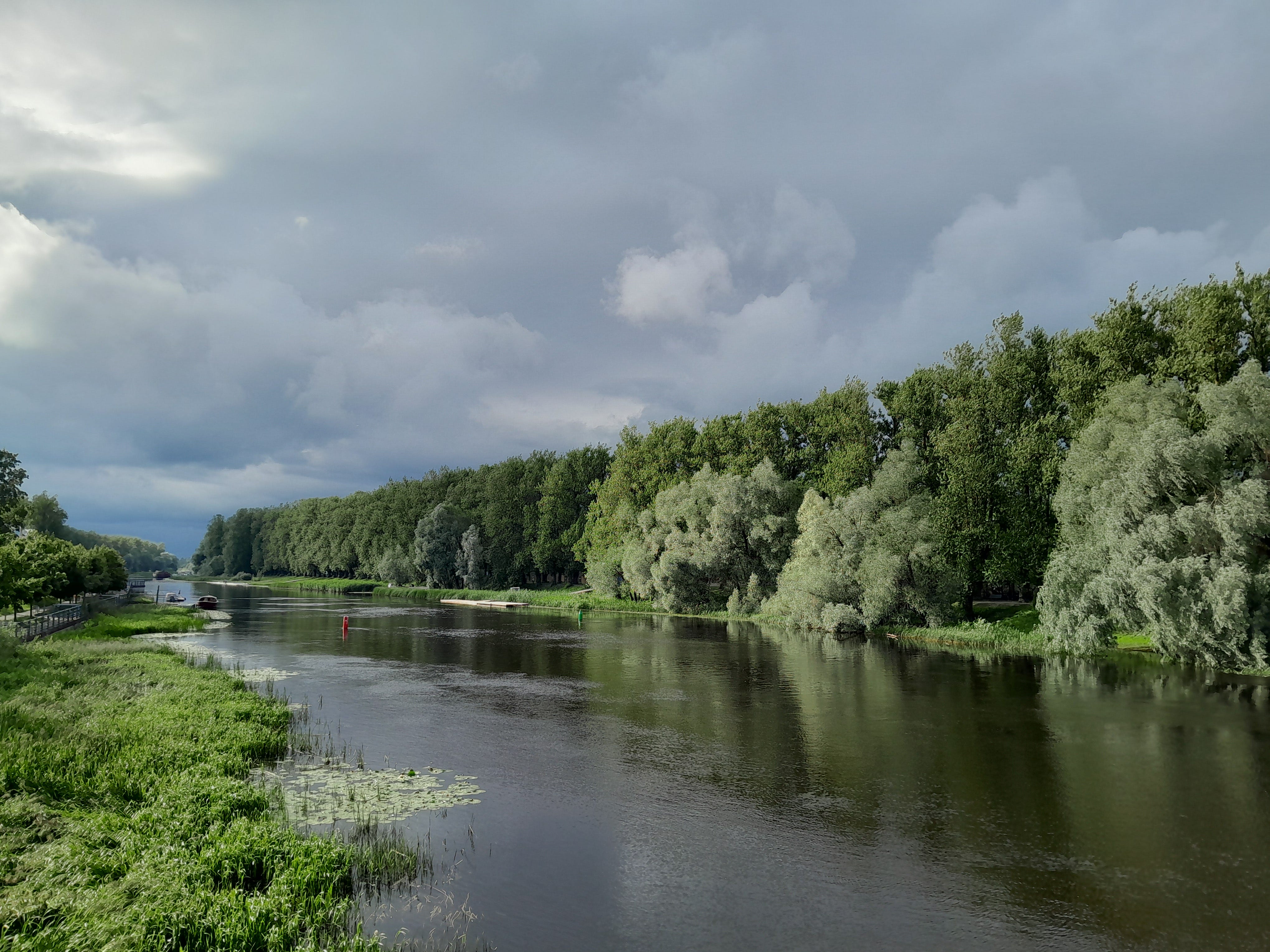
So, what about Finnishness? We already said a word about the matter, through the lens of Ville-Juhani Sutinen’s grand tour of Finland’s tribes.
Only alongside Finland’s autonomy of 1809 and the subsequent definition of Finnishness did people become markedly conscious of regional identities and begin to regard them as characteristics that distinguished groups from one another.
(Sutinen, 2022)
In 1809, the Treaty of Fredrikshamn is signed that concludes an episode of Napoleonic wars and defeated Sweden is forced to cede the Finnish part of its kingdom to Russia, within which the collection of provinces, unified into a Grand Duchy of Finland, enjoys a high degree of autonomy, conducive to the development of an identity. A new humanism arising from German scholarship reaches the Baltic region, whose romanticism extols a noble, ancient simplicity, the epitome of which is rural life. It fosters folklore, the Volkslied, national narratives, which Sutinen testifies to by highlighting the Finnish phenomenon of tribes: both real and mythical, a myth cultivated by the celebration of regional particularities – which together form Finland.
From this mosaic of people, what is the essence, the core? We have already made a brief mention of a text by psychology professor Liisa Kelikangas-Järvinen. (A speech, in fact, from the same collection as another of our previous lectures promoting traits of a Viking temperament in financial managers.) We now return to that speech in more detail, as it has something to say on our topic. (Kelikangas-Järvinen, 2011)
The train of reasoning is as follows. Just as our conception of humanity forms the basis for collective decisions and institutions, self-image (the author, we recall, is a psychologist, the self thereby her core business) is the cornerstone of orientation in life, and a strong and persistent self-image the key to happiness. Modern times (the author conspicuously deplores) conflate personal identity with personal brand. The former is meant to denote « what the person really is » as a result of their experience while the latter implies a construction: an artificial persona shaped according to the way one wants to appear to others, and that ultimately is to be monetized. The workplace and its behavioral intransigence are paradigmatic of the rise of the brand, one that has to constantly shift, « from one performance review to the next ». Modernity thus sets demands for conformity that are perilous to fulfill, as they disregard that individuals, whose development has a context and a history, are not infinitely adjustable (or adjustable without damage).
With the scene set, in comes the pièce de résistance, dealing with nothing less than Finnish essence. We will read the Finnish text (for us this is a second reading, a few weeks apart), and try to outline the very precise method for conducting the (piece-by-piece matching) exercise as implemented at this stage of our learning.
Finns are no Americans.
Me puhumme suomalaisuudesta usein negatiiviseen sävyyn ja ihmettelemme, miksi emme ole sellaisia kuin amerikkalaiset, rohkeita ja valmiita tuomaan itseään esille.
… Me puhumme… we speak… suomalaisuudesta… literally *from (elative case) Finnishness… usein… often… backtracking: we often speak of Finnishness… negatiiviseen sävyyn ja ihmettelemme… *to (illative case) a negative something and wonder… the context helps reduce the gap: speaking in a negative manner? (probability 0.4, just wild guessing) …
It’s a good time to open the online translator. One with an interactive window, where translation appears on the fly while typing the original in. Negatiiviseen sävyyn is in a negative tone.
… miksi emme ole sellaisia kuin amerikkalaiset… why we are not like Americans …
We want to quickly check the precise nature of sellaisia. It’s the partitive plural of sellainen, the wiktionary confirms, such, that kind of, like.
… rohkeita… [missing]… ja valmiita tuomaan itseään esille… and… valmiita… valmis is completed, ready… so ready to put themselves… esille in the allative case… to the front… forward.
Rohkeita is bold. Now, let’s see what’s left and if we can piece the Finnish back together, half from memory, half by reasoning. We open our thème file and start a new line. (It’s simply a long record of serendipitous sentences in a known language each followed by their Finnish translation and a test bench for, precisely, exercising thème, which is nothing but another variety of matching.)
We often speak of Finnishness in a negative tone and wonder why we are not like Americans - bold and ready to put themselves forward.
Perhaps our first attempt looks like that:
*Me puhumme usein suomalaisuudesta negatiiviseen sävyyn ja x, miksi x x niin kuin amerikkalaiset, o ja valmiita tuomaan x esille.
(To avoid exposing our reader to incorrect forms, we (play along and) mark spelling or word forming errors with a x and complete gaps with an o.) We read the Finnish again carefully and pay special attention to our mistakes, for example by pronouncing the words once or twice, going slowly through each syllable while visualizing its correct spelling. We had usein in the « wrong » place (and are not able at this point to tell whether our (mis)placement might be deemed a correct or tolerable alternative). Ihmettelemme missed a letter. Unfortunately, we mixed up emme ole with another form inspired by Estonian. It seems that niin kuin is not fundamentally wrong, but still slightly different from sellaisia kuin, the latter denoting the same kind as Americans, the former the same way. We missed rohkeita altogether which is no wonder as it’s fully new. We strangely added a syllable to itseään. A breather and we resume. (Maybe we even brew a chicory and come back, to let the forgetting machine work.)
Me puhumme suomalaisuudesta usein negatiiviseen sävyyn ja ihmettelemme, miksi emme ole sellaisia kuin amerikkalaiset, rohkeita ja valmiita tuomaan itseään esille.
Right on target. It’s not a victory just yet: we’ll see in an hour or two where we stand. Generally speaking, we don’t revisit old sentences past the end of the session or week, that’s how the list gets longer.
Why are Finns no Americans?
Kulttuuri ei kuitenkaan synny vahingossa, eikä se pakota ihmisiä heille vieraaseen muottiin. Sen sijaan se saa sellaisia muotoja, jotka ovat siinä kulttuurissa eläville ihmisille luontevia. Tämä kulttuurin sisäinen tapojen ja tottumusten luontevuus tulee siitä, että lähekkäin asuminen on muokannut ihmisille samanlaisen ajattelutavan ja geeniperimän. Ei ole sattumaa, että suomalaisia ihanteita ovat olleet vaatimattomuus ja paheita liiallinen itsekehu, joskin Pohjanmaalla se on tunnetusti vähän pienempi pahe. Ihmisten geeniperimä on ohjannut heidät hakemaan sellaisia tapoja, joiden noudattaminen on heille luontevaa.
We can read in broad strokes. Gaps remain.
… Culture nevertheless doesn’t emerge… vahingossa… in context: in (from) the void? or by coincidence? (probability 0.45 each)… wiktionary gives: by accident… eikä se pakota ihmisiä… nor it forces individuals… heille vieraaseen… *into foreign (illative) to them (allative)… into something that’s foreign to them… muottiin… into a form.
Perhaps we get the whole confirmed
Culture does not, however, arise by accident, nor does it force people into a mould alien to them.
or just move on:
Sen sijaan se saa sellaisia muotoja, jotka ovat siinä kulttuurissa eläville ihmisille luontevia.
… Instead, it gets the kind of (sellaisia once again) forms, which are natural to the individuals (ihmisille in the allative) living within that culture.
This now gets serious.
Tämä kulttuurin sisäinen tapojen ja tottumusten luontevuus tulee siitä, että lähekkäin asuminen on muokannut ihmisille samanlaisen ajattelutavan ja geeniperimän.
… Tämä kulttuurin (genitive, our parser reads on) sisäinen (adjective, read on) tapojen ja tottumusten (more genitives, noun complement) luontevuus (parser stop: head noun)… luon- for all things natural and -uus noun forming suffix describing the fact of possessing a quality… naturalness?.. backtracking: the naturalness of ways? (for tapojen, probability 0.8: it’s fine but (wiktionary check) habit would fit even better) and productions?… for tottumusten… very wrong!… we mixed it up with the family of tuottaa, to produce… tottumus is habit, custom… the naturalness of habits and customs inherent to that culture… tulee siitä, että… comes from the fact that… lähekkäin asuminen on muokannut ihmisille… residing (substantivized verb) in close proximity (adverbial lähekkäin within which we spot lähe-, all things close) has worked onto individuals (literally the allative in ihmisille yields to/onto individuals where muokata means to work (on) a material, to give it shape, so here, to give a shape to individuals or shape them into)… samanlaisen ajattelutavan ja geeniperimän… a similar way of thinking (ajatellu-tavan) and genetic heritage.
Let’s grant that. Proximity homogenizes worldviews and the gene pool. The slope is slippery: a world view gene?
Ei ole sattumaa, että suomalaisia ihanteita ovat olleet vaatimattomuus ja paheita liiallinen itsekehu, joskin Pohjanmaalla se on tunnetusti vähän pienempi pahe.
… It’s not a chance… or rather, it’s no coincidence… that Finnish… we are stuck a bit on iha, happy... a substantive in the same galaxy that’s not the property of being happy… in context, perhaps something whose fulfilling makes happy: ideals… opposed to paheita… badness (paha, bad)… ideals and vices… that Finnish ideals have been… in vaatimattomuus - tt- suffixes the negation, the opposite… vaatia… to demand, require, order… to need… nearby, to need the look of others… so, vaatimattomuus for modesty;.. and (Finnish) vices (have been) excessive (liian is too much) self-praise; … joskin… *if-though (jos-kin) so certainly just although… Pohjanmaalla… *in the northern county… it’s culturally the region internationally called Ostrobothnia… although in Ostrobothnia that’s notoriously a slightly lesser vice.
Interregional teasing.
Ihmisten geeniperimä on ohjannut heidät hakemaan sellaisia tapoja, joiden noudattaminen on heille luontevaa.
… People’s genetic heritage has guided them into seeking the kind of habits (it has all been seen earlier, that’s the magic of reading, the author’s thoughts revolve around a theme and a style and with that, things get increasingly clear)… joiden noudattaminen… joiden is in the genitive, whose… noutaa is to fetch and the suffix -tta- makes for a causative or frequentative verb… of which noudattaminen is the substantivized form… the fetching of habits or, say, the adherence to habits… *habits, whose following is natural to them… that’s a bit ackward, say habits that come to them naturally.
Have we misread? No, that’s it. The genetic pool induces a vernacular character and vernacular mores. People hastily conclude that the Finns have a weak self-image: that’s because Americans, who have different values (their ideals are the Finns’ vices, very precisely), see them through their own, distorting prism, which holds modesty for a flaw:
Vaikka vaatimattomuus on suomalaisuudessa hyve, niin käsitys suomalaisesta heikosta itsetunnosta on kuitenkin myytti, joka on syntynyt amerikkalaisen arvomaailman ohjaamana ja siitä, ettei kulttuuria ja sen tapaa ilmaista asioita tunneta riittävästi.
Although modesty is a virtue in Finnishness, the notion of Finns having a weak self-image is nevertheless a myth, one that has arisen guided by American values and from insufficient familiarity with Finnish culture and its way of expressing things.
Here is the key to the riddle:
Suomalaisuuteen kuuluu sanojen sijasta pätevyyden osoittaminen teoilla. Mikään meidän historiassamme ei osoita heikkoutta tai epävarmuutta, vaan historiamme on itsenäisen ja itseensä luottavan kansan historiaa.
… *To Finnishness / belongs / instead of words / the display of competence? (probability 0.4) / into works… needs to be straightened: Demonstrating competence through deeds rather than words is part of Finnishness.
Thus defined, modesty is clearly a virtue indeed. The Finns can praise themselves for having it. (Ostrobothnians aside, who already aren’t shy of self-praise.)
… Mikään meidän historiassamme… Anything in our history… ei osoita… backtracking: mikään + negative (ei) turns into nothing… Nothing in our history indicates… heikkoutta tai epävarmuutta… weakness or uncertainty… vaan… (the German sondern, the but also in not only… but also)… historiamme on historiaa… our history is the history… itsenäisen ja itseensä luottavan kansan… of an independent and self-confident people.
We are no longer one surprise away. The semantics of genes and character get intertwined in the wake: nothing less than « ihmisen psykologiseen perimään », « the individual’s psychological heritage », which « kansainvaellukset ja laajat muuttoliikkeet », « mass migration » have influenced. Then, the orator goes on, there are those who leave (again) and those who stay. It’s a matter of character compatibility. Those who leave take their genes with them. That is how Americans came to be: as is well known (sic), the Europeans who set out to colonize North America had the gene for boldness.
Unfortunately, in the grand finale, her argument shoots itself fatally in the foot. In self-esteem tests, Finnish Swedes score higher when asked in Swedish than in Finnish. The speaker strangely infers that self-image depends on context. We conclude rather that it is impossible to draw any conclusions about the low self-esteem of Finns.
We come back to our senses. No, it’s not that kind of essentialism that draws us into learning a language like a machine. Personal identity pertains to persistence (of one’s character) in time: we warmly welcome the French phenomenologist Merleau-Ponty to the discussion.
As Merleau-Ponty puts it, our temporal existence is both a condition for and an obstacle to our self-comprehension. Temporality contains an internal fracture that permits us to return to our past experiences in order to investigate them reflectively, but this very fracture also prevents us from fully coinciding with ourselves. There will always remain a difference between the lived and the understood.
(Gallagher, 2025)
Such existentialism shatters the laments of our psychology professor, that the modern individual is ignorant of who he is, or that Americans (foreigners) are ignorant of Finnishness. Self or national character do not possess the solid core of a thing existing outside the consciousnesses that think them, which would only need, in order to be known, to be illuminated by a spotlight (empiricism) or reconstructed through the cold, solipsistic work of inner reflection (rationalism). These two strands of intellectualism misconstrue an idle consciousness that no phenomenon can solicit:
… ni l’un ni l’autre ne saisit la conscience en train d’apprendre …
… neither grasps consciousness in the act of learning …
Yet attention is intention: it’s
… la constitution active d'un objet nouveau qui explicite et thématise ce qui n'était offert jusque là qu'à titre d'horizon indéterminé.
… the active constitution of a new object that makes explicit and thematizes what was hitherto offered only as an indeterminate horizon.
Through the interaction of patches of world within the field of vision, the moon at the horizon and at the zenith appear of different sizes, « grandeur sans mesure qui est pourtant une grandeur », « size without measure that is nonetheless a size ». It’s not a matter of saying that there is no pre-existing moon, it is precisely because there is one, calling out to us, that we become aware of it: our vision recreates it.
Also, our orator speaks more wisely than she knows when she deplores, of the modern individual, that « hän hakee minuutensa aina kulloisenkin tilanteen vaatimuksista », « they seek their selfhood always from the demands of whatever situation they find themselves in ». That's exactly how it is, timelessly and by nature, in the eye of Merleau-Ponty: ever « open » situations trigger, consciousness grasps. (Merleau-Ponty, 1945, p. 56-60)
We lack the stripes to join decisively the nature-nurture debate and we’ll nonetheless take the liberty of looking into the latest advances made by competent stakeholders: no soft science here, heritability actually ramifies from probability theory. How much (what share) of a given population’s phenotypical variation can be explained by variation in independent genetic factors? That’s heritability. In virtue of the law of total variance, a very rough equation modelling the matter writes
Vp = Vg + Ve
where Vp denotes the statistical variance (within said population) in some phenotypical trait, which admits two explanatory components, the variances Vg and Ve dues to genes and « environment » respectively. Thereafter, heritability is by definition the ratio Vg/Vp. Whether it’s a proxy for genetic causation is a spiky question.
Broadly speaking, how do you assess the « causative content » in an association between two variables that is clear-cut enough to doubt the mere play of randomness? That’s precisely the question studied by epidemiologist Bradford Hill in a riveting article fittingly entitled « The environment and disease: Association or causation? ». (Bradford Hill, 1965) He spots nine cardinal facets in causation assessment, each individually providing a pertinent yet incomplete account. To name a few, strength estimates the ratio in the rate of occurrence of an effect (lung cancer) between presence and absence of a factor (smoking or not) or several values of said factor (not, lightly, heavily smoking). Yet, the true cause could correlate perfectly with and hide behind the presumably causal factor (e.g., if smokers linearly lacked exercise). Bradford Hill campaigns, in that matter and generally, for pragmatism and good sense: if strength is high, such a phantom factor (whose distribution would have to closely hug that of the putative cause) is implausible. Eventually, cases abound in medicine of weak association (low correlation) concomitant to a strong link (few harborers of meningococcus develop meningitis, while it’s massively more likely for the former to develop the latter compared to baseline). After strength, the next telling clue for causation is consistency: has the association been repeatedly observed across different places, circumstances and times. And sometimes, there is no way to replicate under new circumstances or at all: this by no means means causation isn’t true or potentially strong. Then comes specificity, the extent to which we can find a bijective mapping, or at least a function, between values of the cause and effect variables. The strength of the causal link between smoking and lung cancer has been criticized on the grounds of its missing specificity: smokers die more than non-smokers from many other diseases. Common sense, then, invites examining « specificity in the magnitude of the association » (lung cancer rates raising in smokers significantly more than rates of other causes of death). Evidence of specificity, Bradford Hill recalls, is decisive, but its lacking not conclusive. Biological plausibility is an interesting additional feature, while it’s entirely bound to the current state of scientific knowledge.
It dawns on us that, despite the alluring ingenuity of least-squares regression, proving the causal nature of an association witnessed in the experimental sciences might be no small feat after all. In a paper attempting to temper criticism against heritability and, especially, its interpretation as a gauge for genetic determinism, Bourrat pinpoints that heritability computations target the demonstration, not of causation in general, but causative specificity in particular. They are interested in the causes of variations in the trait (variance decomposition). Among a population, does variation in, say, temperament (boldness vs. shyness) associates with a variation in the genes (in which case we (tend to) observe a deterministic mapping between putative causes and effects). With that, a genetically determined trait can be associated with a low heritability, and vice versa. A telling example from a noteworthy paper by Sauce and Matzel is the genetically hard-coded number of fingers on a human hand: since most humans have five, and exceptions mostly lost some accidentally, phenotypical variations are little explained by genetic ones. No matter how many fingers you actually have, you most surely (rare inborn cases excepted) have the five finger genes, and there is no deterministic mapping between cause and effect values. (Bourrat, 2019; Sauce, 2018) Also, a first obvious concern resides in heritability providing at most a narrow outlook on causality. It fails to account for the association’s consistency. Bourrat distinguishes invariance (across a large range of values of the cause variable) and stability (over a large range of values of some background variables), while showing the predicament is another formulation of the classical problem of locality. Strikingly, it also dismisses a further critical feature of causal associations from Bradford Hill’s list, namely temporality. That a cause comes before its effect seems an undervalued truism. For somatic mutations altering in spots the genome of living cells are well established, which occur both spontaneously and under environmental pressures. Moreover, epigenetic modulation sneaks into the chain linking DNA to the phenotype-inducing protein products. In both, the environment, that we understand is the crux of the matter here, comes to prefix, and intermingle with, the supposed causal train.
In the hasty model introduced above (and Bourrat’s theoretical argument), genetics and environment are indeed assumed to be independent factors. It recalls financial probability paradigms built on the hypothesis that market risk is zero, which is of about the same order of magnitude as the posit that evil does not exist. In practice, the whole community nowadays concedes a richer model that can be written
Vp = Vg + Vgg + Ve + Vge + Cov(g,e) + Vres
where Vgg denotes the variance in gene-gene interactions (different genes at different loci whose interplay induces the phenotype), Vge that in the aforementioned gene-environment interactions, Cov(g,e) the non-random covariation between genes and environment (inheriting musical-ear genes alongside musician parents), Vres the error term and variance of everything else. It now looks cleaner. Problems arise. In the light of what precedes, do independent genetic factors exist at all?
Does it imply that a single isolated gene produces the trait? In any literal sense, this cannot be true. If you put a strand of DNA double helix in a tube and wait, no distinguishable trait will emerge from it.
Computationally, that’s a flaw its pioneer Fisher (who was also a geneticist) eminently concedes, variance decomposition inherently tends to misrepresent outcomes with multiple correlated predictors as belonging to the source first or better specified in the analysis. In practice, twin and family studies evaluate first a presumably reachable Vg and ascribe to Ve (or the full retinue of fuzzy environmental terms) the left-over obtained by subtraction. (Sauce, 2018) Perhaps technological breakthroughs won’t come to the rescue here. Nowadays, genome wide association studies screen massive data for the single nucleotide polymorphisms (the phonemes of genomics, i.e., the smallest units of genetic differences, assumed to be informative, between individuals) that are statistically correlated with phenotypes of interest. A known pitfall to such techniques is their blindness to combinations of variants at different loci: imagine now screening all permutations among millions of single nucleotide polymorphisms (the semiconductor manufacturers and their « accelerators » have still room for progress.) Even then, present-day genetics has not yet clarified all biological mechanisms of intergenerational information passing (Bourrat hypothesizes elsewhere (Bourrat, 2017) the necessity to factor in the inheritance of epigenetic factors), while the undepictably complex matrix of environmental effects continues to haunt the equation. (Downes, 2025) Add to that the impossible assessment of boldness, shyness, or Finnishness (it seems psychologists try by handing out questionnaires). We are far from studying the association between unambiguous, black-and-white variables as lung cancer and smoking are.
Bourrat’s conclusive remark is interesting: if heritability studies are hopeless at capturing causation, so are all investigations in non-fundamental sciences. (Kind of like saying that the porridge has to be good, since it’s ready.) He names the replication crisis looming over the whole edifice: low replicability, he insists, does not demonstrate the causal relationship does not exist, but indicates it might be « highly sensitive to the background ». We’ve come full circle. He invites to examine causation under several angles. Bradford Hill would probably not have thought less. By placing too much trust in statistical tests at the expense of the evidence, he says, « we grasp the shadow and lose the substance ». The evidence, as far as behavioral or cognitive traits go, is that the environment has a role to play. Malleability operates at the smallest, epigenetic scale in learning and memory, through the methylation of DNA and various modifications of gene transcription-regulating histones. As for the quantification of the respective liabilities, it’s now clear to us that it’s no walk in the park.
Does it matter at all? Just as Pascal preferred to wager that God exists because, whether God exists or not, it suited him better in the grand total, we prefer to wager that there is little that is strictly hereditary and much that is interactional in traits that are amenable to progress. It’s simply more encouraging and less dull. Moldability is our strength and our weakness. It’s what makes us learn languages like a machine, if we channel our attention there, or get addicted, when allured into multicolor snares that perverse reward schemes tighten, to circuits of consumption ruled by those who run the boutique.
It seems that we found ourselves, once again, drawn into literature and that the detection of the Finnishness gene may still be a long way off. Yet, just like Merleau-Ponty’s moon, Finnishness exists: in our eyes.
Finland that keeps us awake is a collage of perceptions and thoughts never finished, always under tension, waiting to be confirmed or contradicted.
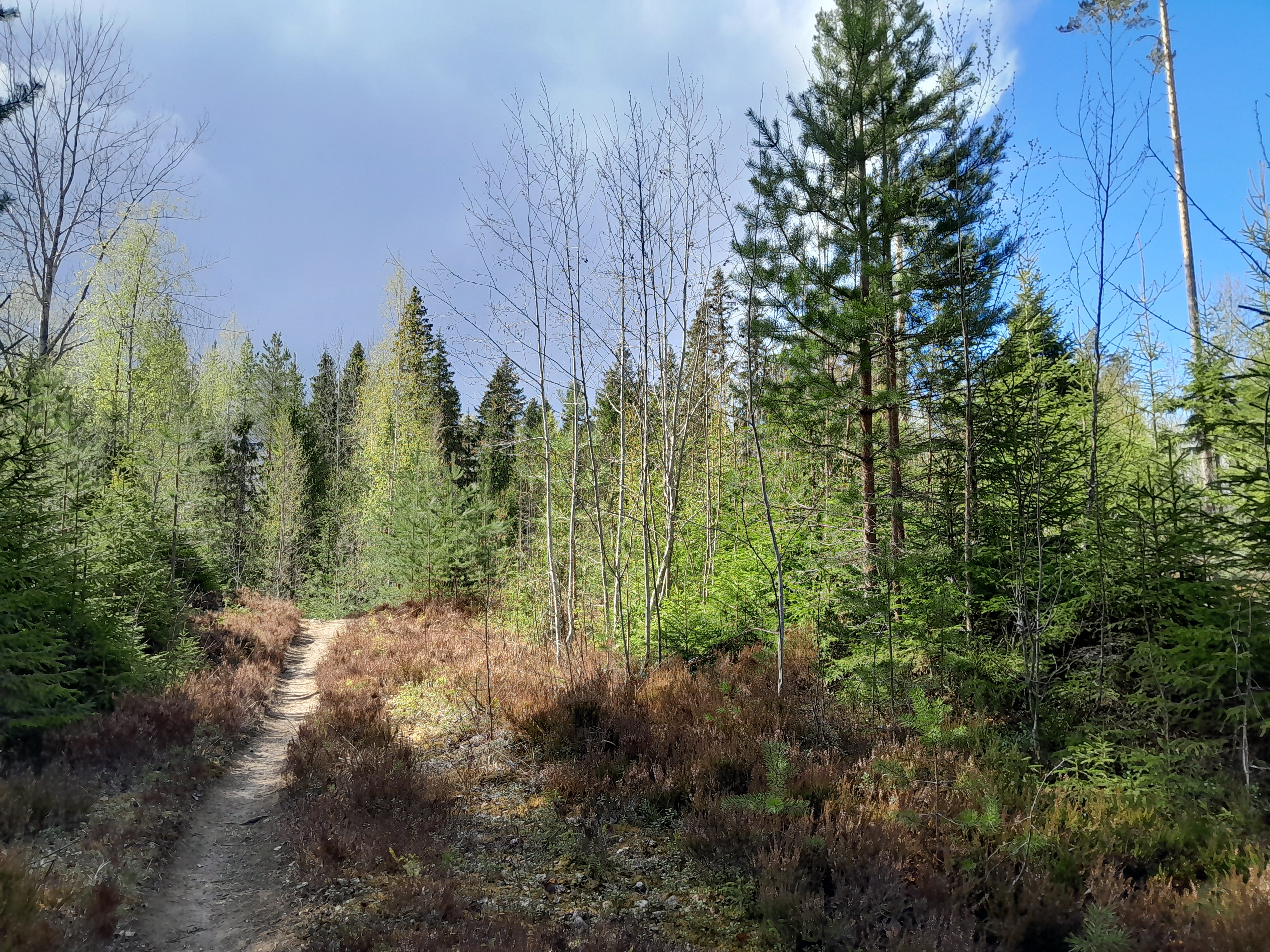
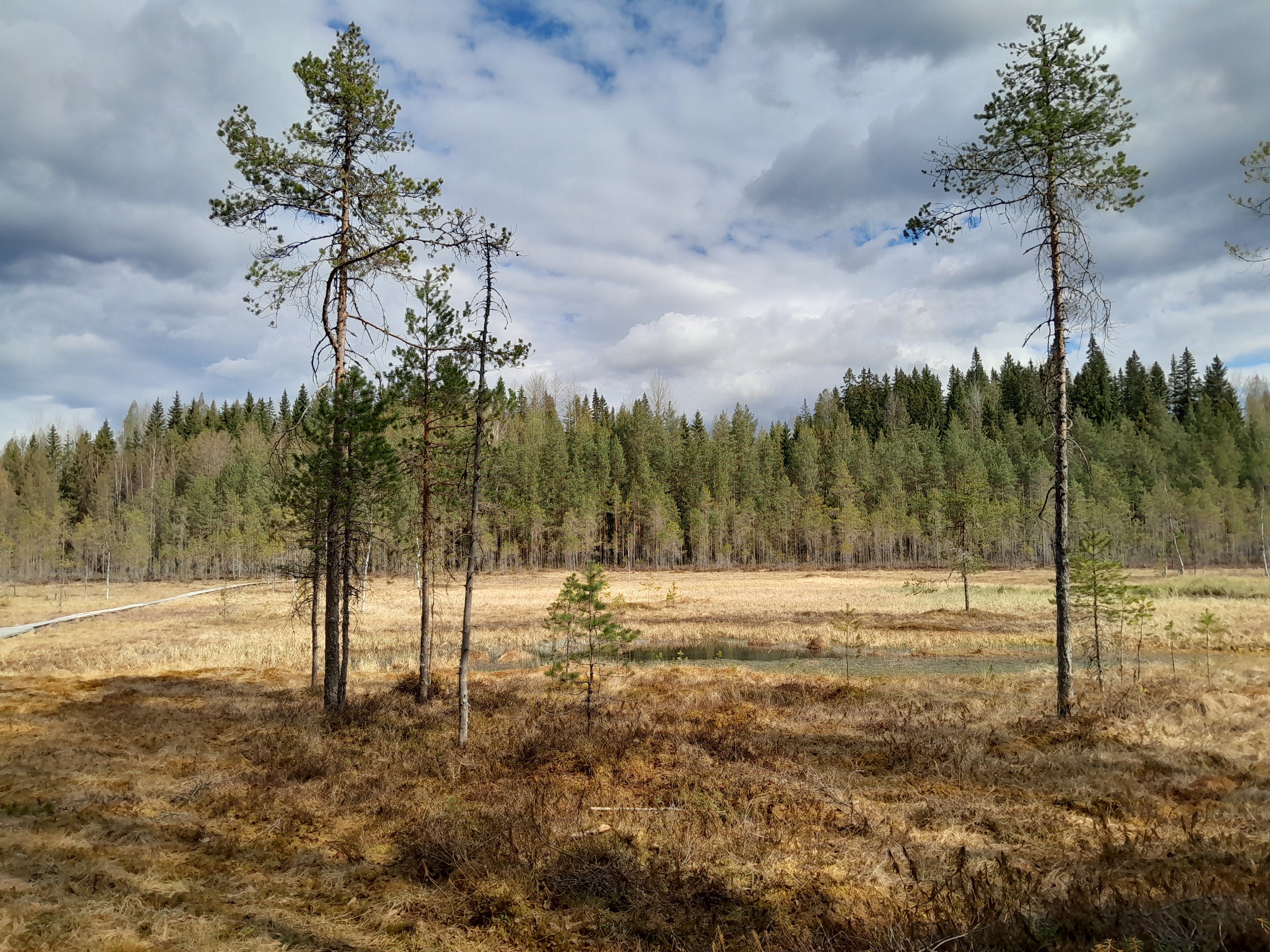
Spring morning, the billowing of a forest, from near to far, that a gradient of green cloaks. The call of a cuckoo. The cuckoo’s call has an auditory encrustation power on par with traumatic retinal persistence. Up the hill through the play of shadows of primordial nature. Mysterious landscape, hilly forest, stretching as far as the eye can see, untouched by human hands, a whisper. A path, the damp clearing of a sparsely wooded marsh.
Winter night, footsteps in the snow. Quiet passages, brick buildings standing tall amid twinkling lights. Cross-country skiers around the stadium whose quiet enthusiasm echoes.
References
Merleau-Ponty, M. (1945). Phénoménologie de la perception. Gallimard.
Sutinen, V.-J. (2022). Matkalla Suomeen: Tarinoita heimojen maasta. Into.
Keltikangas-Järvinen, L. (2011). Minäkuva on elämän kivijalka. In M. Löytönen & A. Eskola (Toim.), Suomalaisia puheita (2013). Suomalaisen Kirjallisuuden Seura.
Gallagher, S., & Zahavi, D. (2025). Phenomenological approaches to self-consciousness. In E. N. Zalta & U. Nodelman (Eds.), The Stanford Encyclopedia of Philosophy (Summer 2025 ed.). https://plato.stanford.edu/archives/sum2025/entries/self-consciousness-phenomenological/
Bradford Hill, A. (1965). The environment and disease: Association or causation? Proceedings of the Royal Society of Medicine, 58(5), 295–300. https://doi.org/10.1177/003591576505800503
Bourrat, P. (2019). Heritability, causal influence and locality. Synthese, 198(7), 6689–6715. https://doi.org/10.1007/s11229-019-02484-3
Sauce, B., & Matzel, L. D. (2018). The paradox of intelligence: Heritability and malleability coexist in hidden gene-environment interplay. Psychological Bulletin, 144(1), 26–47. https://doi.org/10.1037/bul0000131
Downes, S. M., & Matthews, L. (2025). Heritability. In E. N. Zalta & U. Nodelman (Eds.), The Stanford Encyclopedia of Philosophy (Summer 2025 ed.). https://plato.stanford.edu/archives/sum2025/entries/heritability/
Bourrat, P., Lu, Q., & Jablonka, E. (2017). Why the missing heritability might not be in the DNA. BioEssays, 39(7). https://doi.org/10.1002/bies.201700067