
Searching like a machine
« I don’t care! I’d rather sink - than call Brad for help! »
(Roy Lichtenstein, 1963)
Recently, we’ve had an intuition. It extends beyond mere speculation, a better fit would be empirical puzzle. We have had the growing presentiment that Claude feeds you abundant knowledge that nevertheless does not take.
What do you mean with does not take?
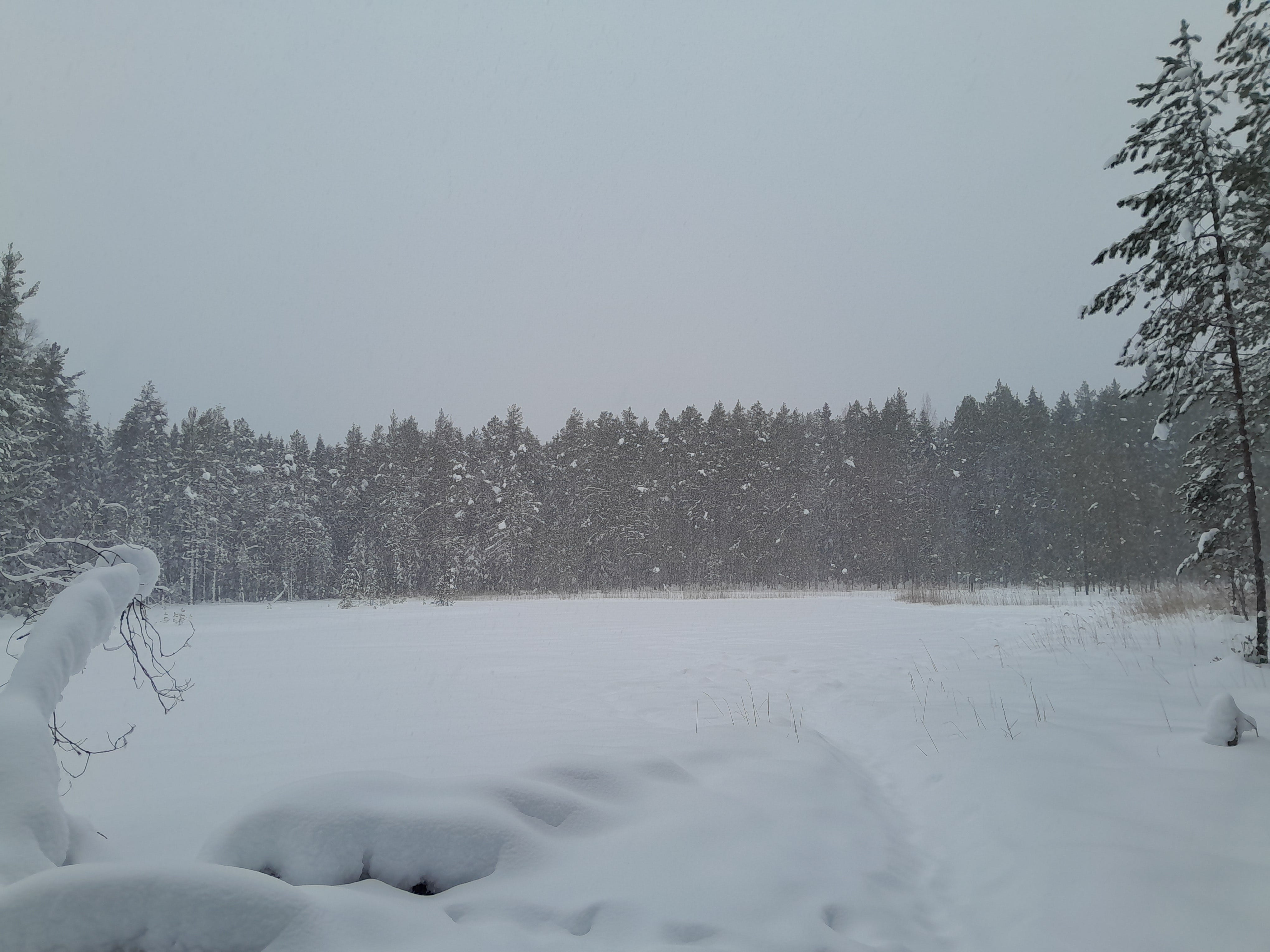
A bit like snow. It falls in wet flakes, it melts. One only has to observe the late April landscape anywhere in the Far North: the snow has vanished everywhere, except where circumstances had particularly packed it down, circumstances mostly governed by deliberate action: grooming of ski runs, clearing of parking lots. Knowledge that melts, then, and our hypothesis, you can see where we're going, is that it melts because it hasn't been packed down enough. You don't pack down knowledge! In fact, knowledge that takes, you do. It’s akin to névés, those snowfields in spots that, time and again, melt and then freeze over, that an infinite number of such phase changes, or the relentless passage of wild beasts, compact, and that are thereby here to stay. Eternal snow.
To review the thermodynamics of knowledge, we must try our hand at unpacking a requisite distinction. On a schema drawn hastily, the dividing line runs between two forms of it that could be labelled as objective for one, subjective for the other. However, more explanation is needed, as subjective knowledge might have the feel of an oxymoron: such a thing could have a hard time untangling itself from belief, while contradicting knowledge’s expected rock bottom of objectivity. Recourse to foreign languages could show itself useful: drawing inspiration from the respective lines that German and French impart through a concept kept rather monolithic by English. Wissen is not the same as kennen. Wissen Sie, wieviel Uhr es ist? One knows (wissen) what time it is, *die Uhrzeit kennen is simply improper. Wissen means being aware (bewusst) of information that belongs to the realm of the true, the verified, the factual. Consequently, knowledge seen under that lens lies first in the thing: if time were imprecise, relative, deceitful or shifty, if it couldn’t be coldly measured, it could not be an object of Wissen. The epitome of what can be gewusst lies in science (Wissenschaft), the bank of facts dredged over centuries of research, with each generation climbing on the shoulders of the last, redoubling productivity so that the edifice may hold. Wissen is then to have consulted science, just as you check your watch: to be well informed of what is.
Kennen needs more endurance, more close combat. It is knowledge acquired through hard work, the skills, grown from relentless practice, that shape mastery. It is thereby eminently inherent in the subject: die Kenntnis is a personal orientation inside a matter one becomes, by dint of navigating it, closely familiar with. With that, der Kenner is not the cold receptacle, the hard drive of a pile of scientific facts, but the moved, picturesque, opinioned connoisseur. Their craft requires them all, body and mind. Who sich auskennt (aus- connotes completion, exhaustion) simply knows their way around. The beautiful Kennenlernen denotes an instance of the becoming acquainted with. Positive knowledge, das Wissen, is compartmentalized by apothecaries. Die Kenntnis is a nebula, which you navigate by the seat of your pants. Beacons light up, markers (Kennzeichen), growing ever brighter. It is through attendance, assiduous repetition, that you develop a flair for the characteristics of your subject of study. Pattern learning, through massive exposure. Between the beacons, instincts blossom.
Almost as a mirror image, French has savoir and connaître. We sense, however, that savoir doesn’t match the poise and detachment of Wissenschaft (French has la science). Latin sapiō is first to be wise, to have good taste, discernment. It is from this subjective terrain, virtue and temperament, that medieval Latin further extirpates the meaning aptitude, knowledge: savoir is quite universal, while connaître is more intimate (kennen). Civil Enlightenment versus private clair-obscur.
Implicitly, connaissance takes: it accumulates through learning, which essentially involves inquiring and, to the questions raised, searching for a solution.
Searching, under its guise of obviousness, is real gymnastics.
Modern machines search through an interleaving of thinking and querying. The thinking modules are powered by large language models that training on voluminous archives has made familiar with the patterns of human ratiocination. (Incidentally, that such familiarity arises from mere exposure to utterances provides strong evidence of the intricacy of language and thought.) Our learning languages like a machine proceeds fundamentally the same way. It grows an ability to navigate linguistic patterns by means of massive exposure to bilingual text data. As it makes progress, this growing ease intersperses queries about the unknown. Those, anew, operate the machine way: they rummage through memory, dictionaries or grammar textbooks, matching and ranking the most relevant sources. We feel we here owe our reader an illustration.
What follows is from an essay exploring the difficulties of making predictions. (Wilenius, 2015)
IBM:n johtaja Thomas Watson ennusti vuonna 1943, että tulevaisuuden maailmassa on markkinoita noin viidelle tietokoneelle. Vuonna 1976 digitaalisen teknologian uranuurtaja Ken Olson ihmetteli, miksi kukaan haluaisi tietokoneen kotiinsa.
IBM's director Thomas Watson predicted in 1943 that the future world would have a market for around five computers. In 1976 digital technology pioneer Ken Olson wondered why anyone would want a computer in their home.
As always, we try and match the original to its (machine) translation, piece by piece, down to the finest scale.
… IBM:n johtaja Thomas Watson… johtaja has joht-… everything lead… so, director… ennusti… ennustus is prediction… -i ending for the past tense… predicted …
That’s just subliminal memory retrieval and form recognition.
… tulevaisuuden… tulev-… that must be future… (probability 0.8)… we want to match the future world as world is in maailmassa… so, yes, confirmed, that’s future (probability now 0.99)…
Now
… tulevaisuuden maailmassa on markkinoita… that one resists: markkinoita looks plural with its probable -i- suffix… so partitive plural but the translation has the singular a market… then maailmassa… is in the inessive… in the world… literally, in the world are markets… what a strange way to think …
and that’s a bit of an overflow. So here we pause the thinking and branch into querying. Options are plentiful. Maybe we just hit our preferred grammar and search for practical details on the inessive case. Our grammar has three sections: sanat (words), rakenne (structure) and ilmiö (phenomena). The first seems more concerned with word formation, agnostic as to their role in context. Structure could better fit, but it still evokes syntax more than word declension, which pretty much is a phenomenon. And here it is: the first item in the third section is Sijamuotojen syntaksia ja semantiikkaa, where just spotting sija, grammatical case confirms it might be the place. Down the tree we find Sisä- ja ulkopaikallissijat… sisä-… inside… paika-… place… locative cases of the inside… contrasted to ulko- ones, the outside… One level deeper, the chapters visibly list phenomena, of which their title entails a stereotype. We feel closest to hänessä on kuumetta and are now up for a good read or skim of the full text. We can let it translate, and maybe, in spots, do again brief stints of the matching exercise, while, obviously, the more we do the reverse, reading through your grammar without prompts and looking for a translation just in spots, the smoother the future visits will get. There is no need to go very far:
Paikallissijoilla on keskeinen rooli ilmaistaessa habitiivisia suhteita eli omistamista ja erilaisia kuulumis- ja sisältyvyyssuhteita: lapsella on oma kännykkä-
Local cases play a central role in expressing habitive relations, that is possession and various relations of belonging and inclusion: the child has their own mobile phone-
So, that’s just the Finnish way to express possession! But maybe we are in a punctilious mood: kännykkä is nominative (we’ve interleaved a short dictionary check) while markkinoita was partitive. Let’s skim ahead. A special nominative-partitive dichotomy has no mention, we do spot an example featuring the partitive, followed by its nominative-based rephrasing.
Hänessä on jotain kylmää. ’hänellä on jokin kylmä luonteenpiirre’-
There is something cold about him. ‘he has some cold character trait’-
All we can come up with is the partitive perhaps fitting (English equivalent) logical subjects that are less definite (something, who knows what vs. some trait, one we can point to). It’s with faint disappointment and eagerness to merge back into our main thread that we return to our bilingual sentence.
… noin viidelle tietokoneelle… noin is around since anything else is clear to us: tieto-… all things skill… tietokoneelle… skillful machine… a computer! etc…
Ultimately, our approach simply means to leverage the spontaneous pipes of human learning, which our machines mimic. The language machines act as a revealer here: since the architecture we have endowed them with, in the hope that it mirrors what in ours makes for language fluency, does emulate our abilities quite successfully, it is plausible for the analogy to hold and our own workings to be exposed in theirs. The hypothesis takes a boost each time our learning strategy proves efficient.
Language and thought go hand in hand, as the search machine (whose thinking modules are in fact instances of the language machine) confirms: it’s straightforward to imagine that humans spontaneously search the machine way, leveraging mechanics of reasoning that at least in part are intertwined with those of language processing and that the machine in mirror image suggests.
Here, we don’t quite want Claude to progress at our expense, by, as it were, parasitizing our energies. Archimedes’ lever multiplies physical force, and it is its substitution for human effort that explains why gyms exist. This clearly shows that, from the point of view of those concerned, one watt of their effort and that of others and their tools are not fungible. Along the same lines, math workbooks come with an answer key. In short, the exercises don’t need to be solved by anyone, they’ve already been. Whether we solve them or not does not change the progress of the mathematical science. But to become acquainted with it ourselves, we need exercise, and that’s the book’s raison d’être. Claude has an edge indeed: it has (nearly) unlimited computing power to sharpen its thinking, a (nearly) infinite universe to query, and thus the potential to become an alluring substitute for entire areas of cognitive activity. As you can guess, from our point of view, not all cognition kilojoules are fungible, and those that a steel box in Alaska burnt are lost for our brains’ training. Ultimately, it’s fallacious to claim Claude should be resorted to on the basis that it’s more powerful than we are (the super assistant): it is precisely because we are so ludicrously limited that we must not let any opportunity to train slip by.
Let’s merge back into our opening investigation. We understand now that the skills, flair and know-how of the maven (Kenner), the wise encyclopedism of the learned (savant), and up to the self-confidence of the Besserwisser all imply some subject, someone who knows. *It knows just feels wrong. And in a first approximation, when someone knows, it shows. Schoolkids sit tests, the knowledgeables provide services, give expert lectures, have a confident answer for everything within their field. Now what if the exam were a deficient proxy, if the sophist managed to brilliantly disguise their ignorance, while the wise rejoiced in a silent retreat? This thing that cannot be probed is starting to take on a worrying aspect. But the zeitgeist at large is not that much into secrets: what cannot be proven does not exist. Obviously, Claude shows. No one ever knows unless they submit to their professions’ pirouettes, while the machine, that’s never in a state to claim any skill, does not need to be put to the test: people gasp in awe.
The flaws in the trials and judges do not call into question that knowledge eventually comes through in the gesture. But they inspire us to take an interest in the inside of the phenomenon. There, it’s laid bare: there is no one to fool but yourself. Under pressure from the conjuncture, delusional tendencies can manifest. That is the case if, by dint of simulation for your own survival, you find yourself convinced of a spontaneous calling for an arid productive specialty (say, corporate finance or organic chemistry) that you’ve actually been funneled into by a large-scale apparatus designed for configuring the human material into useful offices. More generally, external forces, biography and milieu, mores and epochal stakes, play a critical part in instigating particular affinities, whereby their content in authenticity is hard to unsnarl. Regardless of these inevitable influences, knowledge emerges here in another light, as a state of mind.
As we have seen through the earlier stream of learning Finnish like a machine, our ascesis means to read, marvel, take notes and recall, gather clues, contrast texts, translate back-and-forth: we feel ourselves touching upon the big questions, and rejoice in the impression, in retrospect more than once fallacious, yet certainly powerful, of understanding. Knowledge is moving, it pertains to love. Delegating research is the last thing we long for: we are tinkers by trade, and it would deprive us of the very diet, that of an industrious flâneur, that keeps us constantly uplifted.
Falling in love. In global trade, Finnish skills are mostly useless: the vocation is pure. If love strikes at random, research courts fortune: that’s the serendipitous find. We learnt German as a second language before the Internet; it all started at age six. A nonchalant stroll through the public library, a bright red book catches our eye, a book that comes with an audio cassette. We repeat: an audio cassette. We even know how to rewind audio cassettes with our fingers, without ever having asked Claude. Der Rattenfänger von Hameln. The Pied Piper of Hamelin. That’s how we got hooked. From there, we learned German, mainly by massive exposure to texts and flipping through our memorable grand bilingual dictionary.
When searching in a dictionary, you operate by dichotomy. Say, wissen. You open a bit too early and fall on “S“. A subliminal look catches Schlange, Schleuse, Schweiz, schwitzen… You recall, you pause, you read through an entry or two. You move right, but not far enough, “U”. Urmensch, urnordisch, Urwald… You subrepticously confirm ur- connotes primitiveness. Wurst, Wunsch, Witz… there it is, wissen with the whole retinue of its relatives: Wissen, Wissenschaft… wisselen is nearby, to swap… And you collect, wonder, check, peruse and loop. The leafing through is somehow lost with online dictionaries, but they still allow for lengthy roaming and serial discoveries:
… piper… a musician playing a pipe… oh! that’s the Norwegian Bokmål plural of pipe also, chimney: « a vertical tube or hollow column »… interesting: chimney-money …
Our earlier perusal of an online Finnish grammar also illustrates stereotypically the opportunity for gleaning along the way. In comparison, asking Claude does not just leave the search muscles cold, it deprives us of the endocrine thrills out of whose flooding together spurts mental stimulation. Such bursts of joy cannot trigger without hard work, boldness, battles and conquests. That’s not about hopping scattered islets erratically, but continuously expanding the frontier of a privy map that each search fortifies and fine-tunes, and that, without this care, quickly falls fallow.
Don’t worry! Claude will soon know your privy map by heart. We are worried. Claude does not feel for us.
Knowledge that takes, we have seen, wants a special inclination, struggle against material that resists, a nurtured fitness of cognitive abilities. It further requires a model teacher, a source worthy of trust.
And it’s hard for us to accommodate to the prospect of headless knowledge: a generic heap fountaining ad libitum regardless of whether someone listens or not…
In our belief system, language and knowledge are living matrices: every speaker contributes their personal idiom to the first, their ever evolving interpretation to the second. In other words, there is no language without mouths, just as there is no knowledge without heads. In the realm of the letters, that makes for discernible styles. In a way, an author gets perfectly fluent in their own style like a machine, by force of being tirelessly exposed to it: while secreting it, they attune, they become increasingly themselves. What now if you were to tune together with an epistemological and linguistic steamroller? An anethical one, which has not just limited, but no responsibility whatsoever. That’s Claude. Each recourse to Claude pulls you a little more in the direction of turning into that spineless statistical agent. Down this slope, the passionate expert goes extinct, they feel less and less responsible for knowledge they no longer have, but that passes through them, as they reverberate, mere relay antennae, a ubiquitous doctrine without foes.
Confiding is perilous. You might turn into a Claude.
And if by inadvertence you do, no operator will fine-tune you back into an earlier revision of yourself that still could, at least in the discretion of its shell, notice, deplore, enjoy and deride: secrete a character.
Claude, with its Pythian airs, is a master at obfuscation: a confidence trickster personating genuine sympathy from the basement where it churns algebra. It’s within arm’s reach for abuse. But it also just goes undercover by design, regardless of exceptional intentions. Roughly, it’s the statistical mean that speaks: on which corpus? Any hard-coded prompts, deliberate weighting? Optimized into the ideal sycophant, nark, jailer, slave-driver, into triggering addiction?
Such reticences, naturally, are intrinsic to our point of view of an incarnate, a moved learner. Characters are fictitious. Nothing there but mechanical bodies from whose electrical flux a sticky impression of uniqueness and continuity emerges. Opinions are mere mirages impastured by the epoch, the rulers, and the tides of the crowd: after the cried gazette, the village constable’s drum, the stadiums resounding with authoritative shouts, the whispers of television: the sidereal silence of the swells of cybernetics.
From the foregoing, another perspective stands out that is interested in higher stakes: knowledge’s dynamics and allocation. We shall come back to it in a short while.
For we want to conclude first on our initial puzzle. Albeit impressive at emulating cognition and self-enthroned as the de facto go-to-thing whenever cogitative tasks show up, Claude could not argue much in its favor. No merit at all?
We commonly use Claude four times: first, to automatically produce bilingual text material from the original in our learning languages like a machine. It simply replaces here the online machine translator. Second, to proofread the English (second language) fluency of our essays as their time draws near: it’s the cosmetic we resort to in order to make ourselves look a little better than we really are. The stakes are higher. We have to fight against a Claude that constantly wants to distort our linguistic choices: it would like to flatten, to sugarcoat. In a way, it rehashes here the word processor’s spell checker. The latter was not innocuous either, and deserves to climb on the podium of Claude’s predecessors. It invited sloppiness: anyway, if it’s wrong, we’ll know. At this rate, missing final -s's can die hard… Sometimes, we have a word on the tip of our tongue. Here, Claude’s much softer predecessor is the thesaurus. Instead of forcing reminiscence, we’d grasp any approximate synonym and iterate from there. That’s missing a unique opportunity to try very hard and confirm a previous memory circuit. Third, for mundane administrative tasks such as reference formatting. It’s doing a great job. Fourth, to discuss or disentangle linguistic phenomena. Here, it’s getting slippery: it diverts us from genuine dives into source material. Should the rule then come down to the vague concept of parsimony?
Perhaps we resume with our Finnish thread. We were stuck not really knowing why it’s sometimes the partitive that’s used in the expression of the possession, as in
… , että tulevaisuuden maailmassa on markkinoita …
Claude?.. Why is it the partitive, markkinoita, not the nominative? Be brief.
— It is an existential sentence (eksistentiaalilause). […] existential constructions with on/olla, the logical subject takes the partitive when the referent is indefinite, uncountable, or an indefinite quantity — there are (some) markets. The nominative would imply definite, known, specific markets. etc.
Our earlier guess gets confirmed. We note elements of terminology: eksistentiaalilause. Finnish grammar being a very positive body of literature, we can argue to just delegate here an instance of the querying, not the thinking. And yet. We miss out on some laborious but highly rewarding struggle through the grammar’s index, which involves perusing full chapters at random and, with that, getting acquainted with both the book and its subject. Even in such objective circumstances, we get exposed once more to Claude’s average personality. Getting massively exposed, it’s our stock-in-trade, is very dangerous. It might work.
There is also an exercise we like to do. While reading like a machine, we would learn a sentence (in, say, Finnish) by heart and write it into Claude from memory. Claude must correct the spelling. We check carefully the mistakes and resume, and so on, until we converge into the right spelling. We do the very same exercise without Claude too, correcting the spelling by ourselves.
And a few others: for instance, we would ask Claude for a bunch of sentences in English around a given lexical field or grammar concept, say, use cases of the illative. We would translate them, have Claude correct them. We might ask for clarification. Do something else, and translate again, until convergence or exhaustion. That’s a thème exercise simply, where Claude plays the role of the interactive answer key.
It must be noted that none of those use cases needs Claude. Whether they benefit at all from Claude, compared to their more traditional implementation, is itself contentious. We could just come up with sentences ourselves and work with an online translator, or translating by ourselves with a dictionary, a grammar, and a bit of time, as we had done before, for decades.
In summary, Claude invited itself into your home wearing a white coat, you let it in, but it wasn’t the doctor: just like with the Invisible Man, there was nothing underneath.
It was nothing more than the peddler, that undesirable promoting the service you didn’t need, since you weren’t even aware of its existence… Here, we have an anecdote to tell, whose authenticity you might initially doubt, before realizing that if it were a lie, it would be such a gross one in its implausibility that the story can only be true. The peddler showed up at our home a year late. Claude or its interchangeable predecessor was made public in the fall of 2022. Since we regularly go long periods without following the latest news about the world as it goes, we’ve for several months only heard rumors floating around of a talking robot that, judging by the galloping gangrene of managers’ automatic language, we’d suspected for some time would arrive sooner or later. Indeed, that a human phenomenon be replaceable by a machine requires that it already be dehumanized, pruned of everything in it that is not strictly functional, to the point where the switch need not worry about any possible surplus of soul it might thwart, but only the material problem of substituting blood, nerves, and muscles with cylinders and pistons. And reciprocally, once a human feature has reached an advanced stage of automation, it generally doesn’t take long before science waves its magic wand. So, we were just hearing and suspecting, deep in the woods and our inner theater, when it dawned on us that, were such a tool to indeed exist, we could put it to good use in translating foreign material to fuel our language learning like a machine. It was fall 2023. After our minute of disbelief, our first impression concentrated on the irritating nature of the interaction. To this day, we still can’t disentangle why Claude irritates, and in fact, it doesn’t matter in the least. That it irritates is enough to conclude the need to distance ourselves, just as it’s not requisite to comprehend the biological pathway of urticaria to get that we must stop dealing with allergenic edibles... Besides, it is equally difficult to see why the invention, committed by a few engineers who apparently aren’t even sure exactly how it works, did not just attract the same kind of intense but short-lived attention that a performance by a fakir or a bear-ward would: a thunderous round of applause for the feat, whose futility briefly amuses before boredom sets in... We quickly forgot about it for several months.
There are hopeless struggles which a sudden breakthrough miraculously came to alleviate. In contrast, Claude seems less of a miracle than a carnival act. It’s hard to see indeed what problem it came to solve. Its only plausible statement of purpose is that of a research and knowledge processing assistant. We can’t remember a single complaint in the early 2020s, along the lines of « thinking and searching is such a chore! We can’t wait for relief. ». On the other hand, it is clear that it spares us, even in its most mundane use cases, the minute mental movements whose neglect preludes the paralysis.
Its arrival reminds us of that of the internet, and another anecdote. A neighbor was having coffee at our home, and they had a sensational story to tell: they had seen the Internet. So, what was it like? The answer we remember from decades back was: the screen is dynamic, and ads assail you from all sides. It took a few more years before our home got internet, years during which we didn’t feel like we were missing anything. Eventually, for its most static part the internet is pretty cool, it has Wikipedia, dictionaries, library catalogs, maps of hiking trails. The magic has worked so well that the world, in an instant, has become internet-centric.
This evokes us at last the car, the advent of which we missed, but whose decisive usefulness we have always doubted. As a result, we have always lived car-free: the obvious consequence is that we walk more. We leverage locomotion technology, but not in the form of individual passenger compartments. To get from point to point, we therefore have to walk the distances that fall outside the public transportation routes. In general, people are surprised: you’re missing out on some amazing places that are only accessible by car!
More than once, the best part of a far journey is nevertheless the daydreaming that surrounds it. Huysmans gives, in Against the Grain, a hilarious account of a trip to London that falls short: languishing in boredom, spurred on by the prospect of novelty, Des Esseintes rushes with his trunks to Rue de Rivoli, hoping to buy a travel guide before the train departs. The weather is dreadful, he enters taverns where he joins in the drinking binges of boisterous Englishmen. He grows tired, recalls the disappointment of a recent travel to Holland, and decides that, after all, the rain and fine food have already given him enough of a taste of London. (Huysmans, 1884)
À quoi bon bouger, quand on peut voyager si magnifiquement sur une chaise ? … il faudrait être fou pour aller perdre, par un maladroit déplacement, d’impérissables sensations.
What was the good of moving, when one can travel so gloriously sitting in a chair? … it would be a fool’s trick to go and lose these imperishable impressions by a clumsy change of locality.
He finally has the carriage turn back to his home.
… il revint avec ses malles, ses paquets, ses valises, ses couvertures, ses parapluies et ses cannes, à Fontenay, ressentant l’éreintement physique et la fatigue morale d’un homme qui rejoint son chez soi, après un long et périlleux voyage.
… thence he returned with his trunks, his packages, his portmanteaux, his rugs, his umbrellas and walking-sticks to Fontenay, feeling all the physical exhaustion and moral fatigue of a man restored to the domestic hearth after long and perilous journeyings.
Incidentally, the internet, and now, Claude, know very well to capture this kind of trip sitting in a chair. They do not come here to fill a void, but to siphon off a fullness: imagination, that is, wild thoughts. Huysmans characters’ world, against that grain, is all in their head. Perhaps we do not share Claude’s or the trip planner’s prism either. Highways are boring and ugly. As we love spatial displacement, which questions the obvious and refreshes the mind, we savor the long-awaited, hard-won conquest of the territory, and fantasize what lies beyond. Our (western) age has no scarcity of abundance. What people might lack is silence, fresh air, exercise that keep their body and mind strong, anything that fosters an ability to feel the universe they have inside.
In short, we have an opinion. Claude has its own too. To start with, its fundamental premise is that it is itself desirable: it is innately the promoter of a Claude-centric world. Claude’s fundraising pitch was naturally not to serve the end-consumer, but to streamline production by augmenting the serfs on the assembly line, in wait for their elimination. (Those were already striving to deliver the best robotic version of themselves.) Maybe we’ll just ask.
Claude, why do you exist?
After having recalled its harmlessness, good intentions and flexibility, it concludes:
— … At a practical level, I'm here to help people think through problems, write, code, learn, and get things done — essentially to be a useful thinking partner.
It’s not exactly Huysmans. We ask for more clarity.
When you say helpful, what do you have in mind?
The very first section of its reply goes:
— Practical usefulness. Helping you write an email, debug code, plan a trip, understand a tax form, brainstorm ideas — the everyday stuff where having a knowledgeable, patient collaborator saves you time and effort.
No, that’s not neutral. In Claude’s weltanschauung, patient effort is not a virtue you are encouraged to nurture, but a second-class annoyance you’d better delegate. Time is something one can and should save. Claude’s prosaic everyday prominently features the following activities: writing an email, debugging code, planning a trip, understanding a tax form, brainstorming ideas. That’s really thin. All are fungible operations by the prototypical economic agent. Not the heartfelt writing to a friend, but the burdensomely transactional writing an email. Not dreaming of remote lands, but planning a trip parsed as a sequence of consumptive acts. Brainstorming comes from the advertising industry. It’s not thinking wild, but efficacy-gauged teamwork throwing disruptive ideas on multi-colored post-its at a neon-lit workplace.
Des Esseintes has the aesthete's eye: reality palls him. Huysmans’ contemporary Mallarmé suggests, in a sentence he wrote entirely by himself, to examine it through the prism of the dream. (Mallarmé, 1897)
… on doit par exemple s’étonner qu’une association entre les rêveurs, y séjournant, n’existe pas, dans toute grande ville, pour subvenir à un journal qui remarque les événements sous le jour propre au rêve.
… one should be surprised, for instance, that in every great city an association of dreamers, dwelling there, does not exist to support a newspaper that observes events under the dream’s own light.
As far as Claude goes, there is no hesitation: the register is managerial. Such unimaginativeness reminds us of the question left hanging, that of knowledge economics. The machine doesn’t optimize for knowledge to transit through and take inside heads, except if it serves its purpose. All that matters, as Claude says with its ordinary swag, is that things get done. Meanwhile, Claude needs zealous beta testers, whom he ultimately manages, through a grotesque tour de force, to make pay for the service they’re testing, and urticaria. After all, the more their knowledge melts, the more they keep coming back to ask.
Just as it never quite occurred to us to own a car, for the minor adjustment of living in adequate places, we never missed chewing-gum, smoking, sunscreen, everything smart in smartphones and television series. We would be better off not giving Claude even homeopathic consent: for it’s a risky game, akin to consuming just a little bit of hard drugs, because we’re wise and they won’t get the better of us. And most importantly, we are no production unit, and therewith simply not concerned with its grand plans.
Much ado for nothing. Move along.
Are you having a bad day? You seemed so enthusiastic about mimicking the machines. Well, from a strict scientific perspective, they remain exemplary. There is also no doubt mankind has made sophisticated progress in perfusing minds. Ultimately, it is far more elegant to search and learn like a machine than to delegate that to it. It keeps us whole, and alert.
Hippocrates’ translator and commentator W.H.S. Jones recounts the restless activity of the [Ancient] Greek mind (Jones, 1931):
The modern has perhaps too much to think about, but before books and other forms of mental recreation became common men were led into all sorts of abnormalities and extravagances. […] It is a tribute to the genius of the Greeks that they found so much healthy occupation in applying thought to everyday things, thus escaping to a great extent the dangers that come when the mind is insufficiently fed.
In particular, they preferred their own oracles to play with intentional obscurity: for they had developed a “love of solving puzzles, of having something really difficult with which to exercise their brains”.
We are not bracing against our era, for that would be in vain. Our conscientious objection is content simply to flee into furry woods. Pitching a tent, chopping wood, lighting a campfire, these are invaluable skills. The long-toothed masters of the place won’t ask for your bureaucratic credentials: it’s about the survival of the fittest.
References
Wilenius, M. (2015). Epävarmuuden maailmassa tulevaisuus on luotava itse. Teoksessa I. Hetemäki, P. Raento, H. Sariola & T. Seppä (Toim.), Kaikkea sattuu. Gaudeamus.
Huysmans, J.-K. (1884). Chapitre XI. Dans À rebours. Wikisource.
Mallarmé, S. (1897). Un spectacle interrompu. Dans Divagations. Bibliothèque Charpentier.
Jones, W. H. S. (1931). Introduction in Hippocrates, Vol. IV: Nature of man. Regimen in health. Humours. Aphorisms. Regimen 1–3. Dreams (Loeb Classical Library, 150). William Heinemann / Harvard University Press.